

Grinwell: Web3 platform.
React and .NET over Web3.js, with Solidity contracts on Ethereum built on OpenZeppelin. The hard part was never the chain: it was making pending, confirmed and failed legible to people who do not think in transactions.
The challenge.
- The product needed to transact on-chain while staying approachable for non-crypto users.
- Wallets, tokens and contract calls had to be wired safely into a clean interface.
- On-chain state had to reconcile with an off-chain view users could trust.
- Gas costs, failed transactions and pending states had to be communicated honestly rather than hidden.
Our approach.
- Built the interface with React, integrating wallet connection and signing.
- Wired on-chain interactions through Web3.js, Solidity, Ethereum and OpenZeppelin.
- Reconciled on-chain events with an off-chain read model for fast, readable state.
- Kept flows guarded so users understand each transaction before signing.
- Surfaced transaction state honestly — pending, confirmed, failed — with clear recovery paths.
The outcome.
- Users transact on-chain from an interface that hides the plumbing.
- On-chain and off-chain state stay reconciled and readable.
- The contract layer is isolated so it can evolve safely.
- Users always know the true state of a transaction, including when it fails.
Related financial services work.
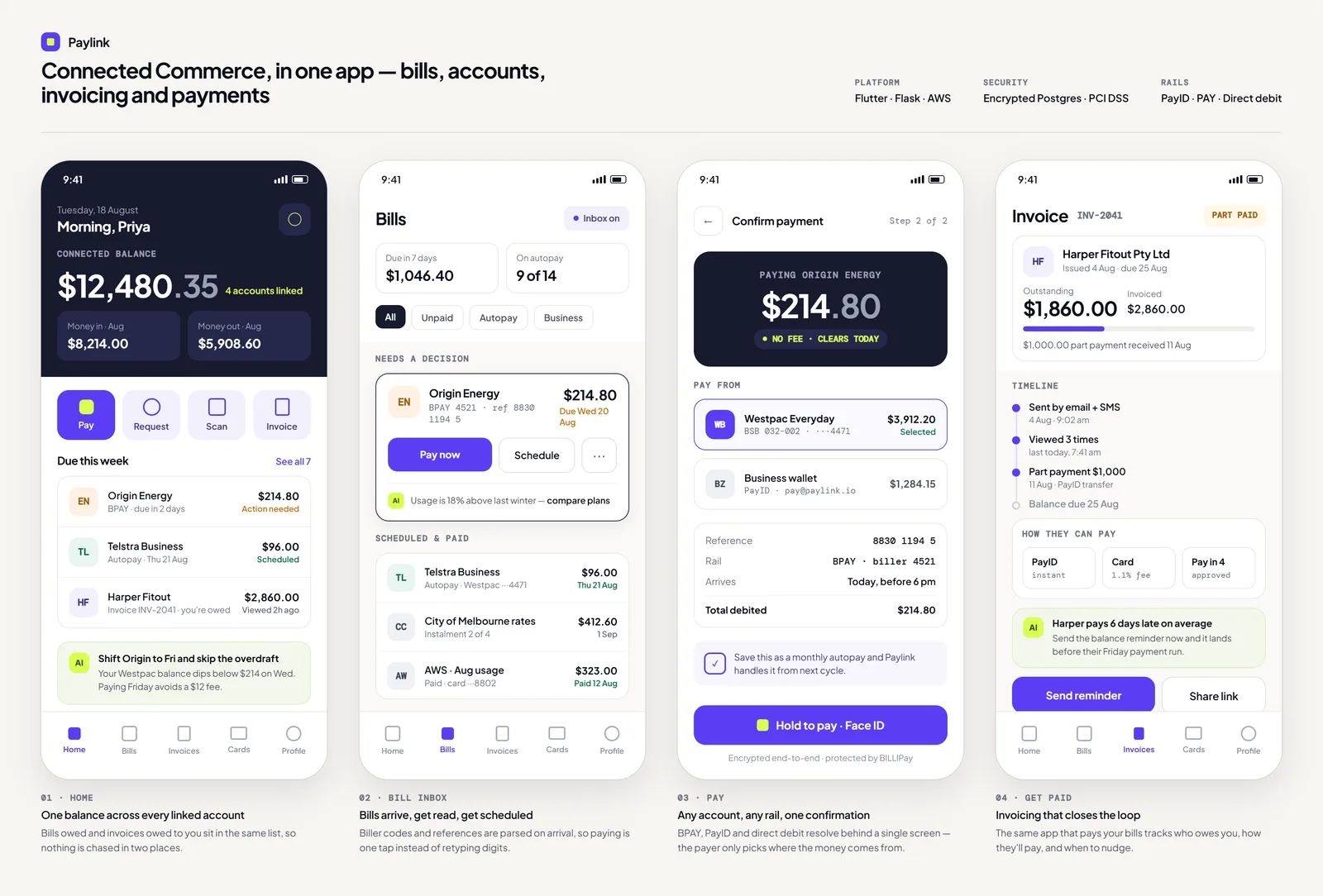 Finance · Australia
Paylink: connected commerce for Australian SMBs.
SMBs get paid, pay bills and reconcile from one app instead of four tools.
Flutter · Flask · PostgreSQL · AWS
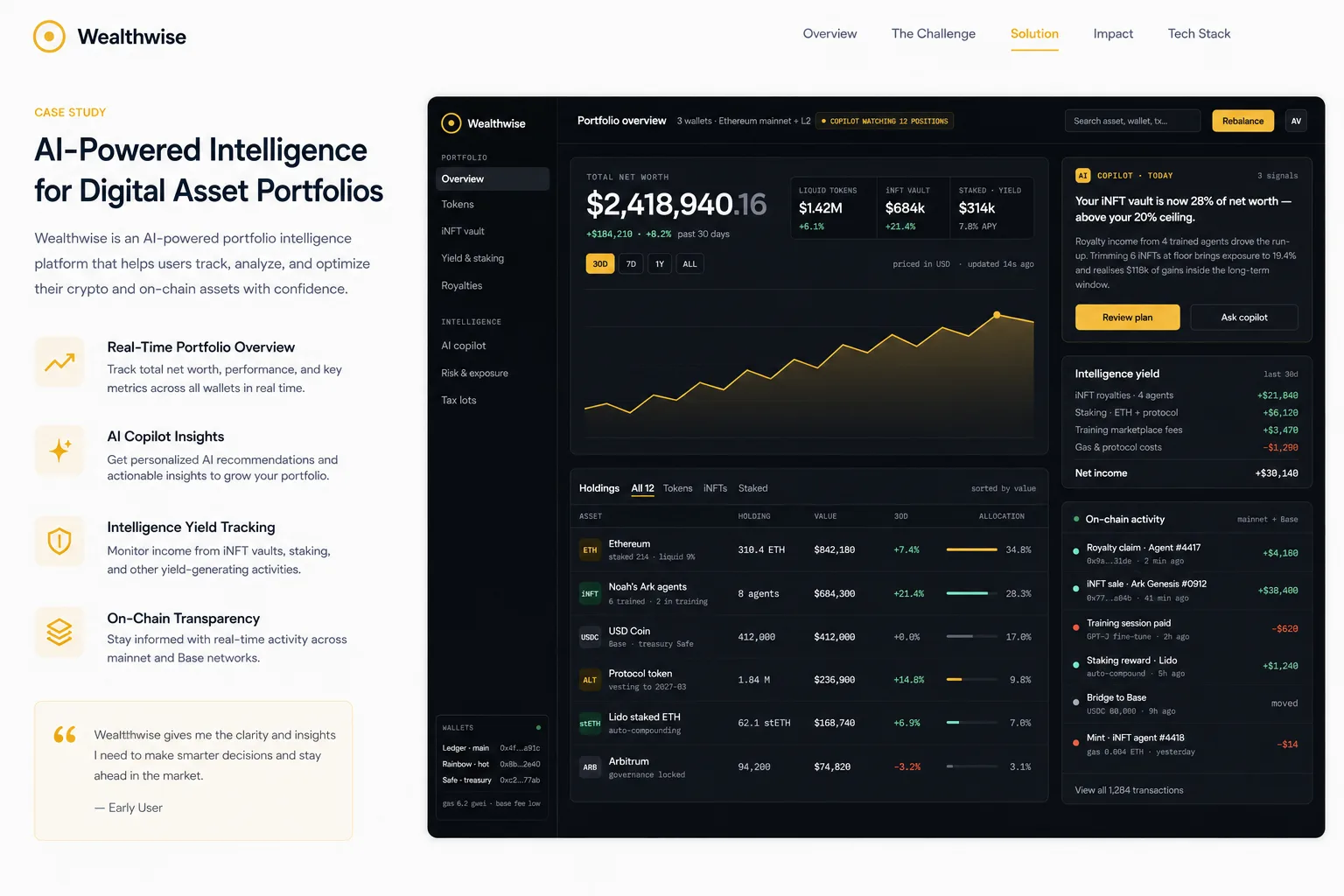 Finance
Wealthwise: Web3 platform.
A web app for on-chain finance, built with React, Django, Node.js, Express, PostgreSQL and Web3. Wallet connection, contract calls and transaction state are wrapped in an interface that non-crypto users can operate with confidence.
React · Django · Node.js · Express
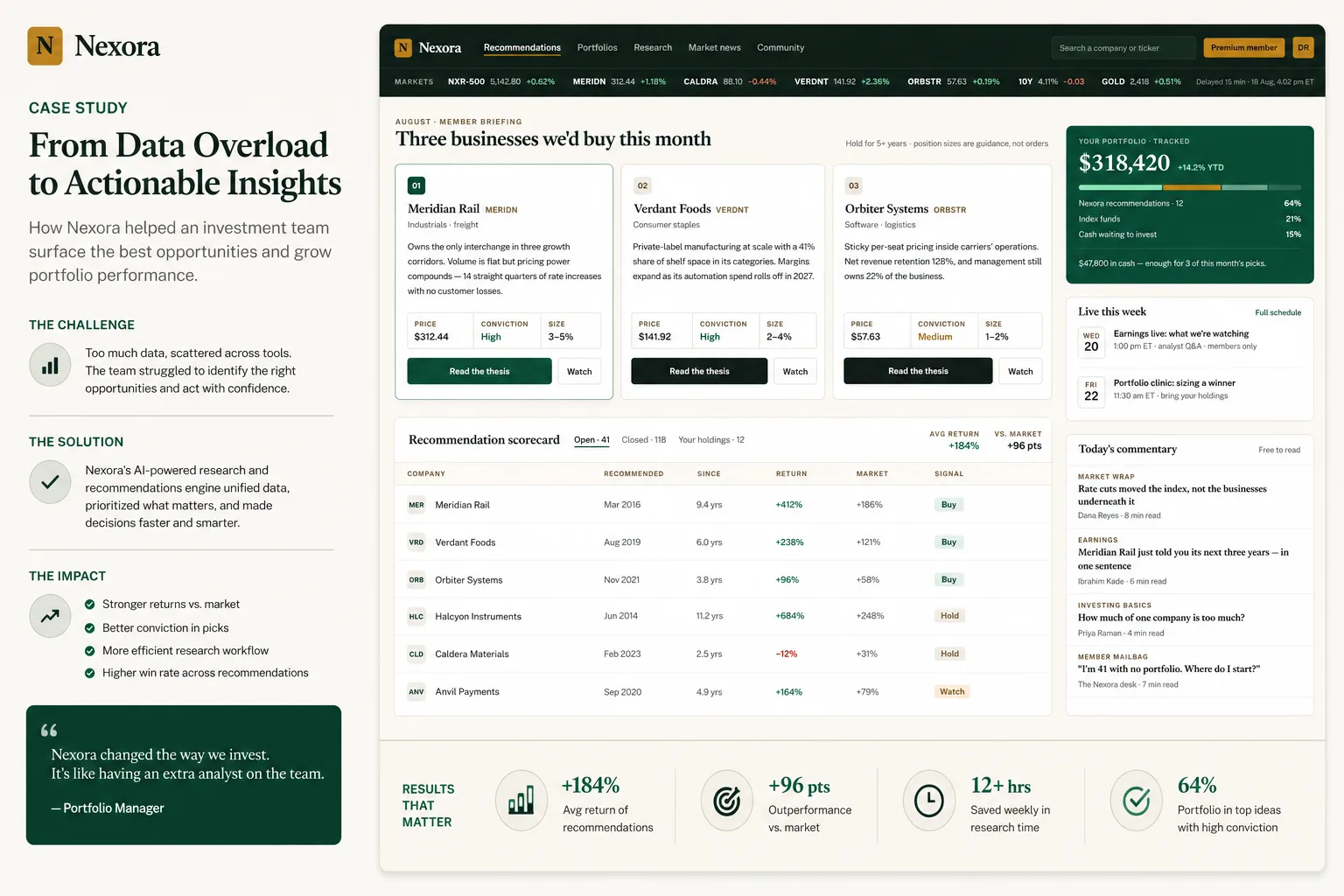 Finance
Nexora: Investment platform.
A web app for investing & markets, built with React, Django, Django REST Framework and PostgreSQL. Watchlists, holdings and research sit behind one login, tuned to stay responsive when the market is open and traffic peaks.
React · Django · Django REST Framework · PostgreSQL
Where AI fits in financial services.
Retrieval over policies, filings and statements, assistants for analysts and operations teams, and document checks that leave an audit trail a regulator can follow.
Explore AI developmentLet's build from here.
Thirty minutes with an engineer who builds. No sales, no drip campaign. If we're the wrong fit we'll tell you and point you somewhere better.