
Case studies / Logistics & mobility · United Kingdom
Sangfroid Group.
One place to plan maritime operations.
Project X connects voyage planning, crew, equipment and commercial records. Its companion People application keeps personnel, roles and qualifications organised.
Discuss a similar project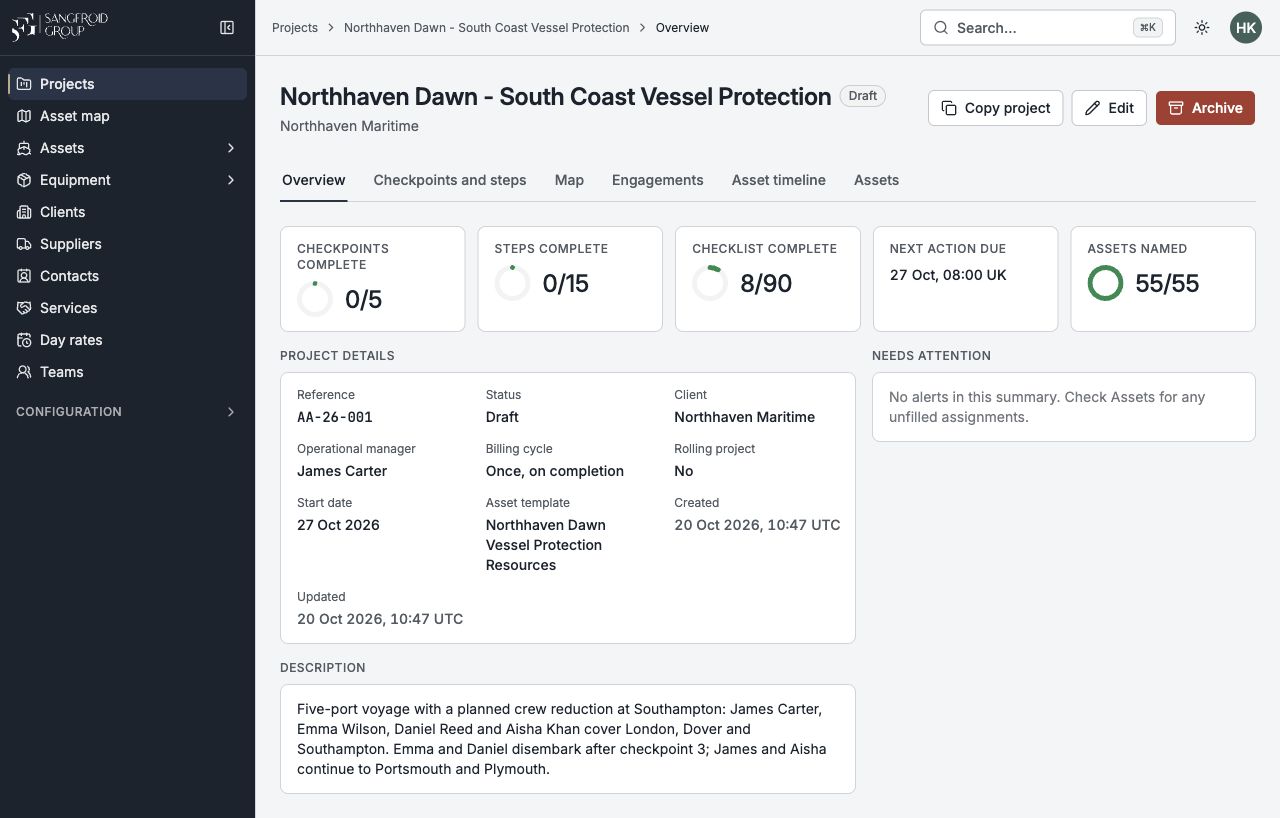
The challenge
A voyage is a sequence of decisions.
Maritime operations bring together people, vessels, equipment and services at different locations and times. A crew change affects resource assignments; a port call brings its own checklist; commercial records need to stay connected to the work.
The platform gives that work a common structure: a project contains checkpoints, each checkpoint contains service steps, and each step identifies the resources and actions it needs.
01 / Operations
Plan the journey.
Keep the detail.
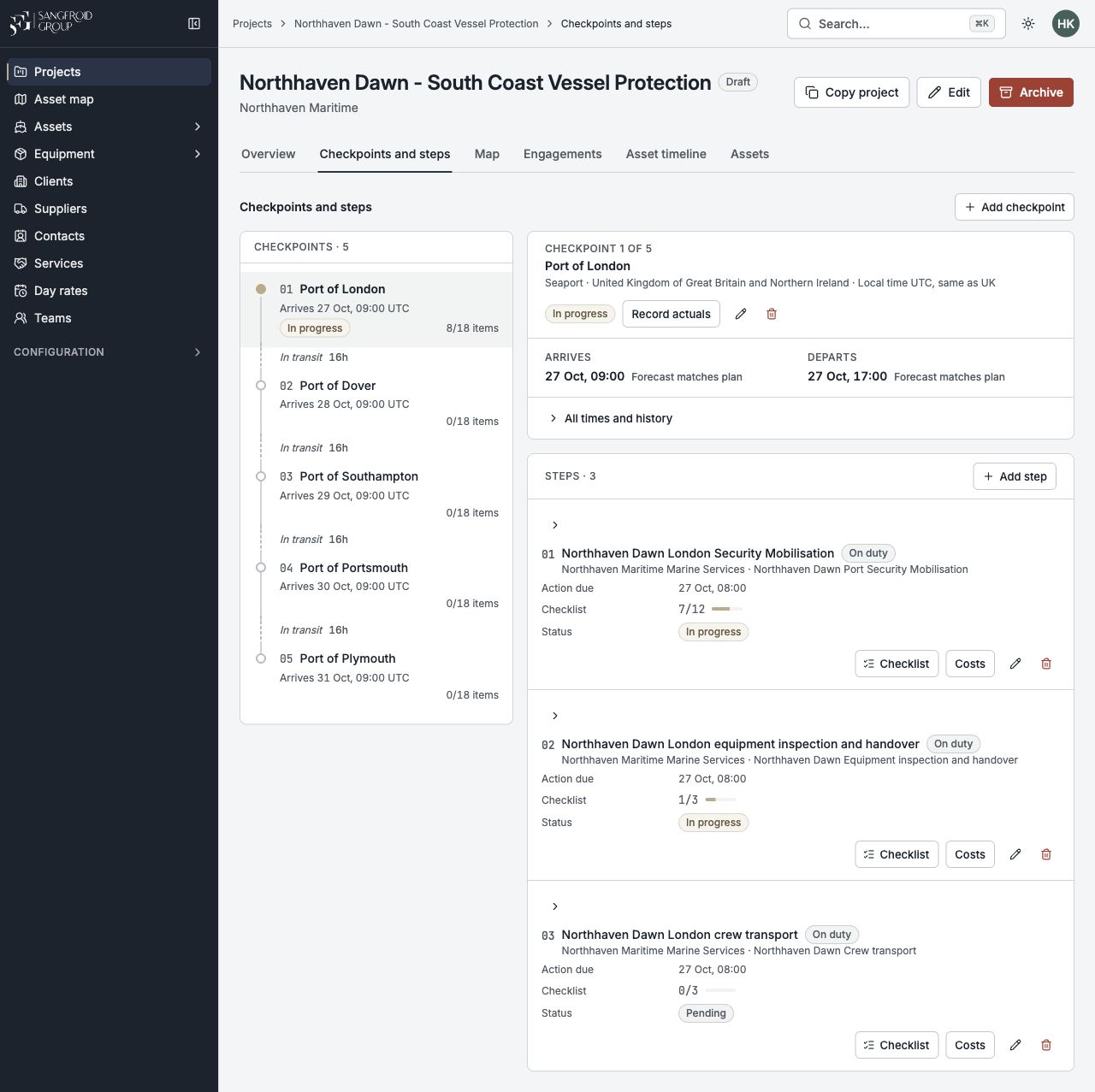
Ordered checkpoints bring together locations, planned and actual times, service steps and checklist progress. Operators can work through a port call while keeping the wider voyage in view.
02 / Accountable workflows
Actions with context and history.
Operational checklists connect readiness checks, equipment state, communication preparation and expenses to a specific service step. Completed actions retain their timing and history.
People records bring roles, skills, certifications and supporting documents into a separate application, with permissions suited to the information being handled.
03 / Equipment traceability
From an item to a packed kit.
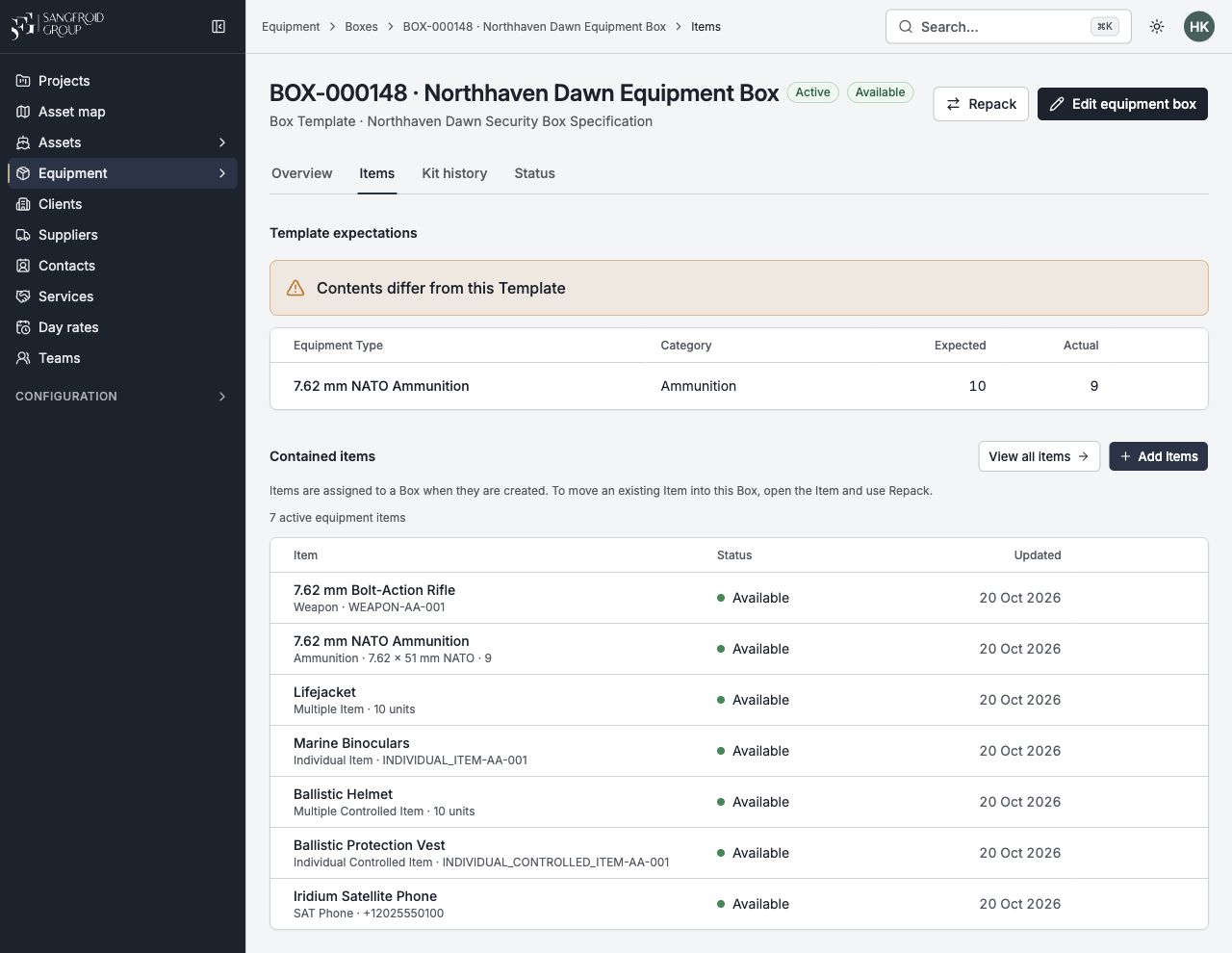
Equipment items, boxes and kits retain their own identities and relationships. Packing views show the contents operators have selected, while location and lifecycle records provide the surrounding history.
The engineering
Separate services.
A connected platform.
Domain services keep identity, people and operations independently organised. Managed cloud infrastructure supports the applications, data, private documents and background work.
- React applicationsProject X and People
TypeScript · React Router · Vite - Protected entryHTTPS load balancer · Cloud Armor
Cloud Endpoints / ESPv2 - Domain APIsAuthentication · People · Project X
Python / FastAPI on Cloud Run - Operational dataCloud SQL · PostgreSQL / PostGIS
Private network connectivity
Technology & infrastructure
| Application | React · TypeScript · React Router · TailwindServer-rendered applications and shared UI components for operational workflows. |
|---|---|
| Services | Python · FastAPI · SQLAlchemy · AlembicSeparate Authentication, People and Project X APIs, with versioned database migrations. |
| Data & files | PostgreSQL · PostGIS · Cloud SQL · Cloud StorageStructured operational records and geographic data, with private storage for supporting documents. |
| Cloud & access | Google Cloud Run · ESPv2 · Cloud ArmorContainerised services behind an API gateway and HTTPS edge. Microsoft Entra sign-in and role-based permissions control application access. |
| Background work | Cloud Tasks · Dedicated email workerQueued delivery separates background email processing from interactive application requests. |
| Delivery & operations | Pulumi · GitLab CI · Secret Manager · Cloud KMSInfrastructure as code, separate staging and production configurations, managed secrets and asymmetric token signing. |
Service-owned databases connect through private Cloud SQL networking. Private document storage and application permissions keep supporting files tied to the workflows that need them.
GitLab pipelines check, build and release the containers, while Pulumi describes the cloud resources. Cloud Logging and Sentry provide operational diagnostics.
Build with Cloudini
Bring your operations
into one working system.
Talk to us about the workflows, integrations and information your team needs.
Tell us what you are building