

Case studies / Risk intelligence · United Kingdom
Dragonfly.
Intelligence with a geographic perspective.
A connected platform for exploring risk, researching locations and working with intelligence. Customer tools and analyst workflows bring maps, structured data and publishing into one delivery platform.
Discuss a similar project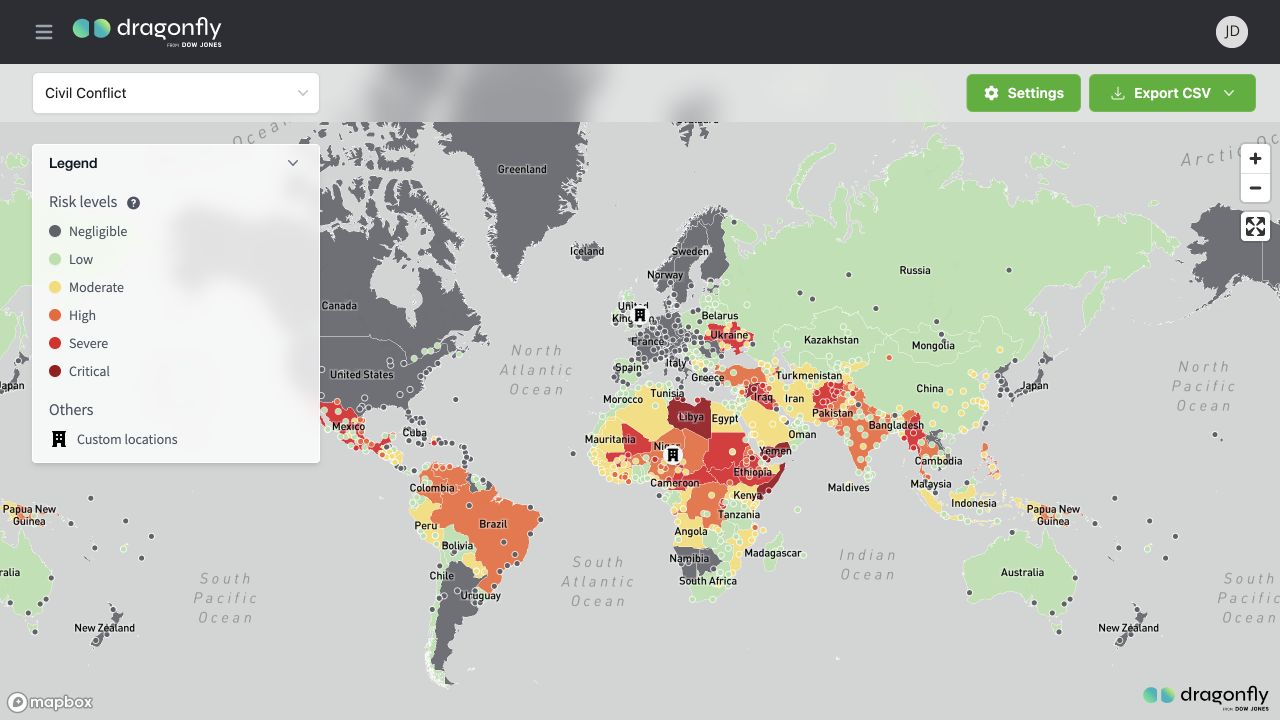
Client account
Engineering through a platform transition.
Dragonfly’s client feedback describes a multidisciplinary team working on its web platform and APIs, with support across different technical requirements. Rebecca Palser also described collaboration with other third parties during the acquisition of Dragonfly and development of its mobile app.
David Claridge described rebuilding client-facing applications into a single platform and the team’s contribution to understanding and improving the product. These historical client accounts complement the application and infrastructure walkthrough below.
The challenge
Connect research.
Keep the context.
Risk intelligence combines structured ratings, geographic locations, events and research. Customers need to move between an overview and the detail behind it, while analysts need tools to maintain and publish the underlying information.
The platform brings those responsibilities together through a customer website, analyst administration tools and distinct backend services. Delivery work has also supported platform consolidation through an acquisition.
The product
From the world view
to the working detail.
Interactive maps connect country and location risk ratings to geographic context. Users can change risk categories, inspect legends, manage custom locations and export structured information.
Research, threat-event views, tables and charts complement the maps. The analyst application provides the administrative workflows behind the customer experience.
Mapbox renders native light and dark basemaps, while risk colours and map controls retain their meaning in both styles.
The engineering
Geospatial intelligence.
A cloud delivery platform.
Customer-facing research tools and an analyst administration application share a service-based backend. The cloud platform handles spatial data, access, publishing and scheduled data operations.
- Customer & analyst UIReact · TypeScript · Remix
Mapbox maps and analysis tools - API entryAPI proxy · Cloud Endpoints / ESPv2
Authenticated service requests - Domain servicesCore · Authentication · Product
Python APIs on Cloud Run - Intelligence dataCloud SQL · PostgreSQL / PostGIS
Spatial records and research content
Technology & infrastructure
| Application | React · TypeScript · Remix · Tailwind · Ant DesignCustomer research experiences and analyst administration workflows. |
|---|---|
| Maps & analysis | Mapbox GL · react-map-gl · Turf · AG Grid · RechartsGeographic visualisations, spatial interactions, searchable analyst tables and charts. |
| Services | Python · Flask · SQLAlchemy · MarshmallowCore, Authentication and Product services divide data, identity and product responsibilities. |
| Data & assets | PostgreSQL · PostGIS · Cloud SQL · Cloud StorageRelational and geographic data alongside cloud-hosted assets. |
| Cloud & automation | Google Cloud Run · Cloud Scheduler · Cloud Run jobsContainerised applications and scheduled import / export processing. |
| Delivery & configuration | GitLab CI · Cloud Build · Terraform · Secret ManagerContainer delivery, a versioned cloud foundation, environment configuration and managed runtime secrets. |
Preproduction and production have separate environment configurations. Terraform and the infrastructure configuration generator define the cloud foundation; delivery pipelines build and deploy the application services.
Scheduled jobs support data imports and exports. Cloud Logging and Sentry provide diagnostics across the platform.
From the client
One of their strengths is quickly building out a multi-disciplinary team to work on the development and delivery of features with different technical requirements. Their support has allowed us to accelerate our development work without building an internal team. They have also worked seamlessly with other third parties both during the acquisition of Dragonfly and development of our mobile app.
Build with Cloudini
Make complex information
easier to work with.
Talk to us about data platforms, geographic tools and the cloud infrastructure behind them.
Tell us what you are buildingWhere AI fits in financial services.
Retrieval over policies, filings and statements, assistants for analysts and operations teams, and document checks that leave an audit trail a regulator can follow.
Explore AI developmentRelated financial services work.
 Anonymised case studyFinance
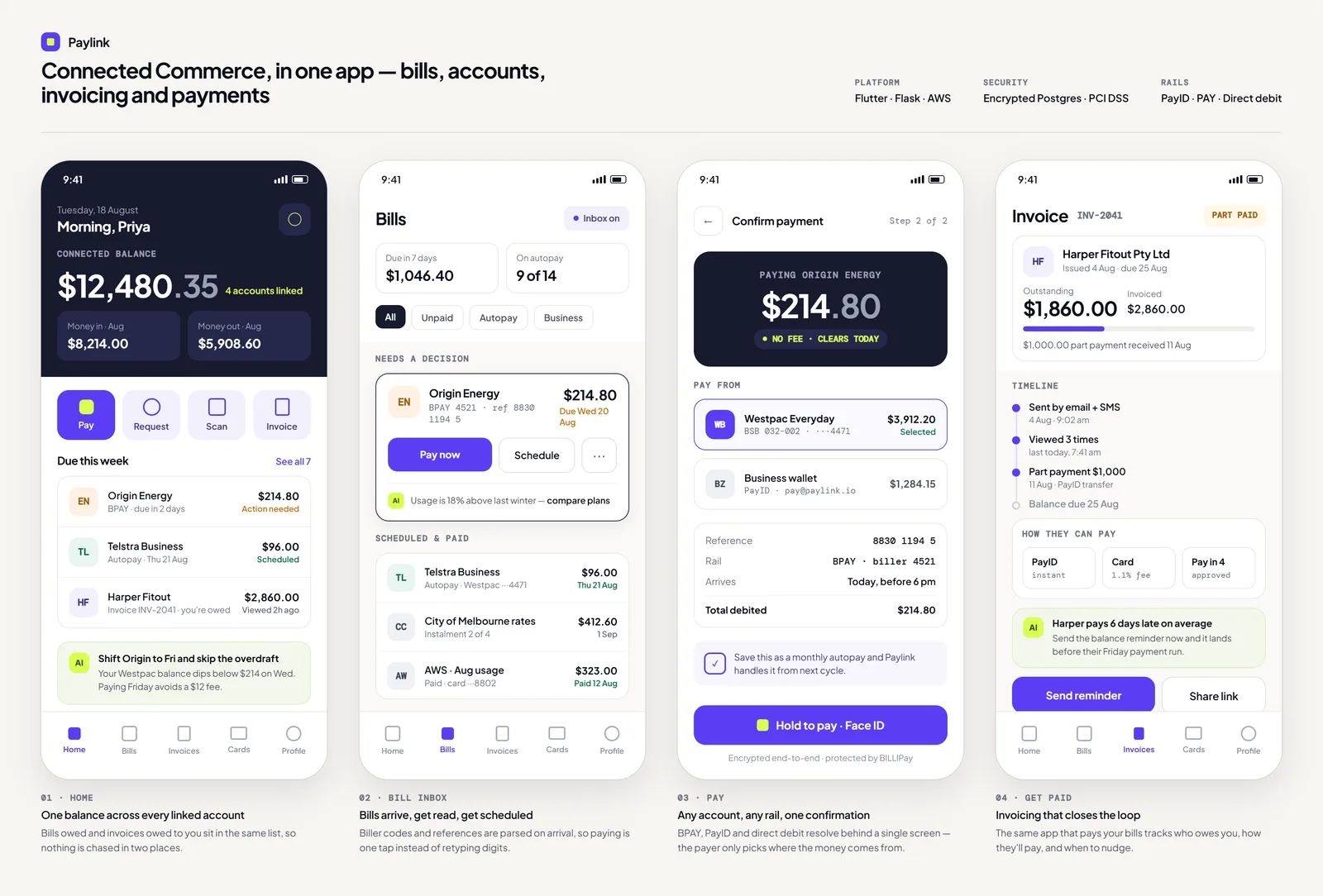
Paylink: connected commerce for Australian SMBs.
SMBs get paid, pay bills and reconcile from one app instead of four tools.
Flutter · Flask · PostgreSQL · AWS
 Anonymised case studyFinance
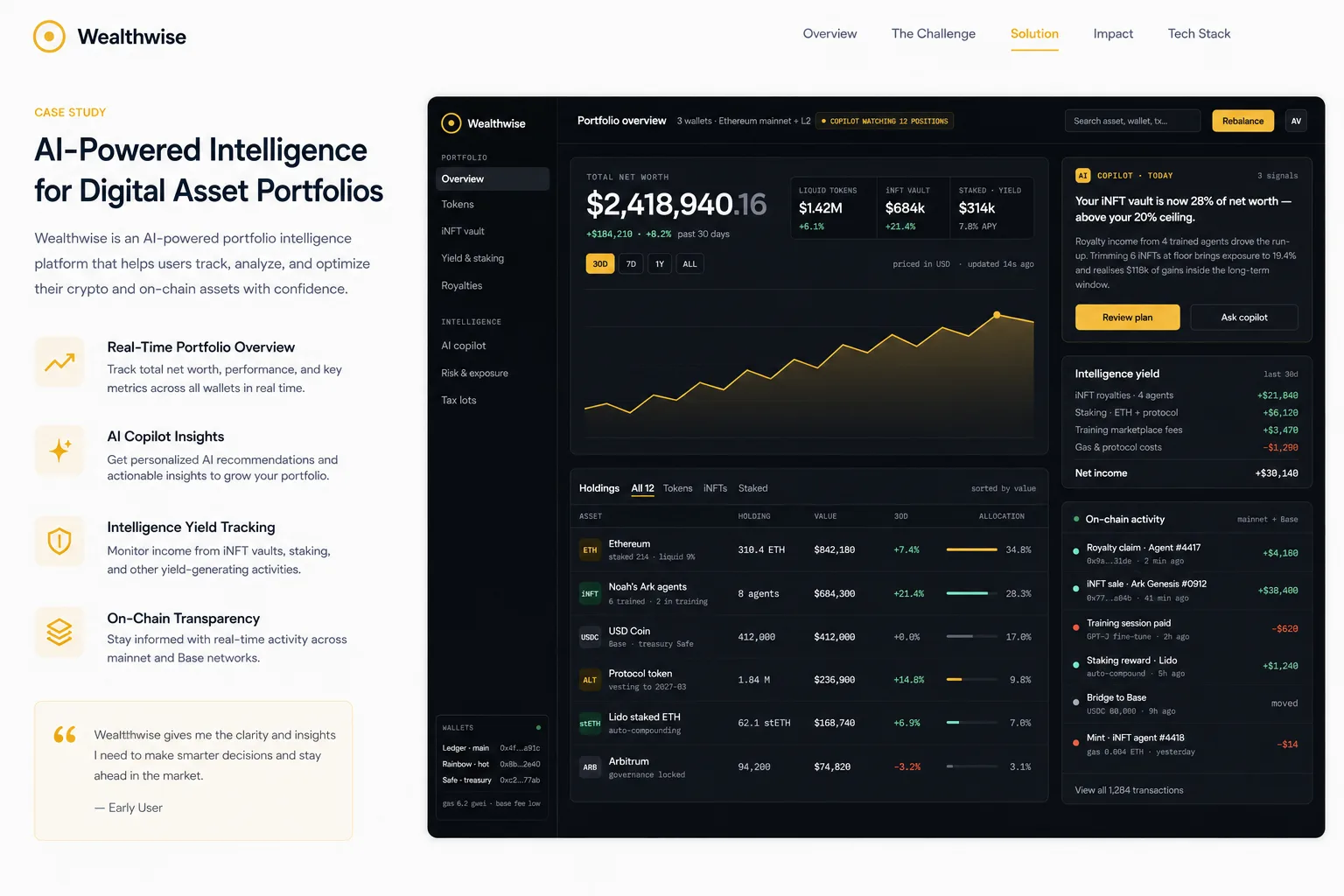
Wealthwise: Web3 platform.
A web app for on-chain finance, built with React, Django, Node.js, Express, PostgreSQL and Web3. Wallet connection, contract calls and transaction state are wrapped in an interface that non-crypto users can operate with confidence.
React · Django · Node.js · Express
 Anonymised case studyFinance
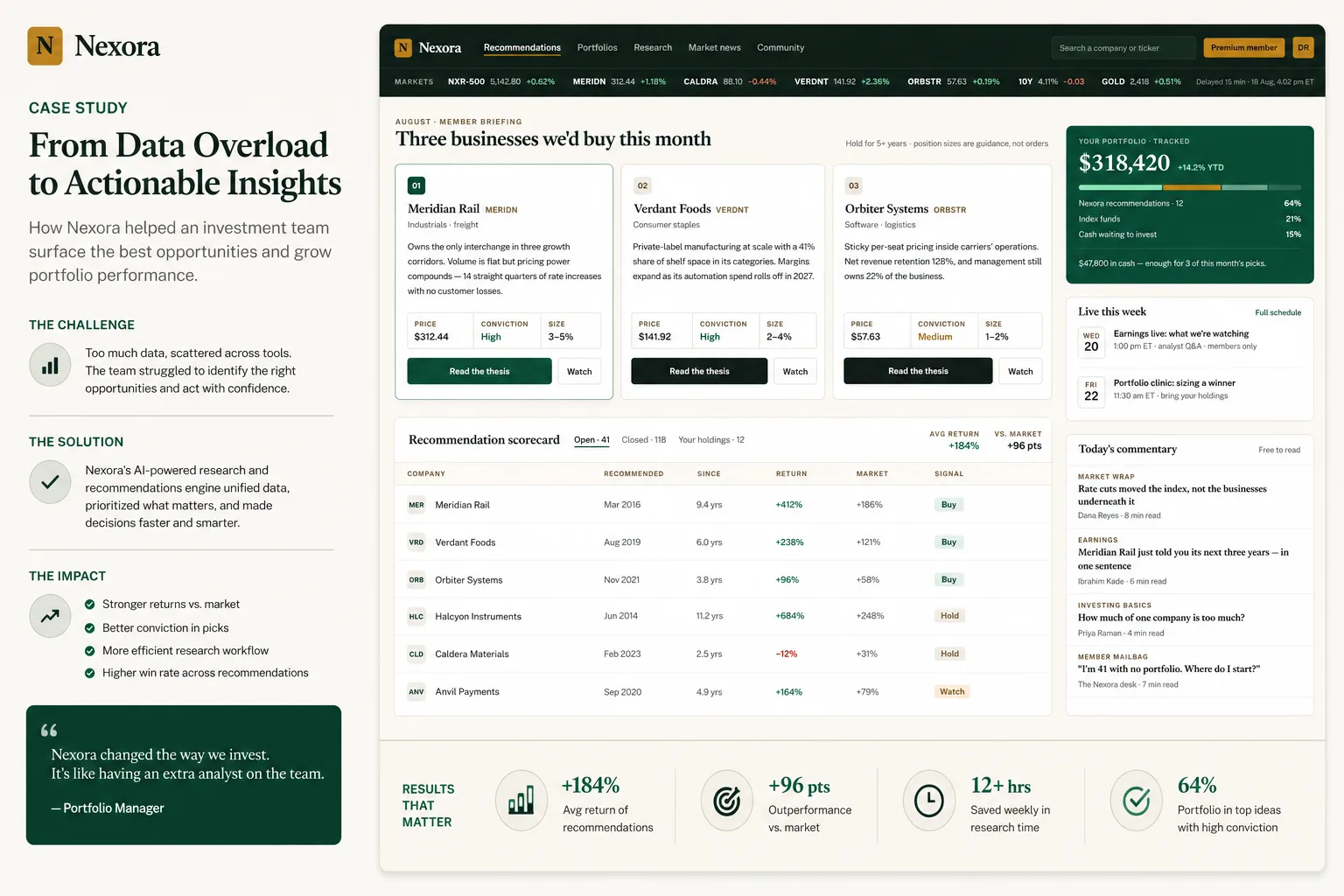
Nexora: Investment platform.
A web app for investing & markets, built with React, Django, Django REST Framework and PostgreSQL. Watchlists, holdings and research sit behind one login, tuned to stay responsive when the market is open and traffic peaks.
React · Django · Django REST Framework · PostgreSQL
Questions about this build.
Rebecca Palser’s historical account describes collaboration with other third parties during the acquisition of Dragonfly and development of its mobile app. David Claridge describes the consolidation of client-facing applications into a single platform.
The screenshot controls show the application’s native light and dark map styles. They change the basemap. The separate Cloudini website toggle changes this website’s theme.
The architecture and stack are checked against the application source. Screenshots use local sample data. The walkthrough does not establish live availability, latency or current risk ratings.